Tuesday, August 28, 2012

Amazon Web Services: $1B in stateless computing revenue, "less than 10% of its eventual size" -- NYT

Active in Cloud, Amazon Reshapes Computing - NYTimes.com:

When an AWS customer speculated on the price of a server--which he never has to buy thanks to Amazon's servers in the cloud--he said, "for me, that would be like knowing what the price of a sword is."

This is an excellent article from the New York Times.  The success of Amazon's effort highlights three important Big Ideas:

  • Abstract complexity
    If you can't eliminate the complex, manage it so the part that is consumed appears simple.  AWS abstracts the entire data center so well, end users neither know nor care how it happened.  Don't Know, Don't Care (DKDC) is one of the biggest enablers of:
  • the Service Oriented Enterprise
    Up to now, buying, configuring and managing servers and the place they live was like a piece of a very elaborate jigsaw puzzle.  It had many edges and only fit together in one way with other similarly elaborate pieces.  AWS is like Lego blocks: standard and predictable. It can be assembled in millions of ways. When the elements of business processes are decomposed into reusable component parts, it's the difference between a Lego store and the impossibly jumbled Room of Requirement in the Harry Potter stories.
  • Decouple data, applications, and machines
    Remember, cloud computing, for all its (mostly justified) hype, is only one part of the stateless future.  AWS represents the impact of stateless processing power at the top level; imagine the same impact propagated across personal and mobile computing, user data, and the applications in your enterprise, and you begin to see the true promise of the stateless future. 

Wednesday, August 15, 2012

New tech research models: threat to Gartner and Forrester, opportunity for you?

Business models, the realities of making money by selling goods or services, change.

  • You don't see many Tower Records stores any more, do you?  The retail music business model changed with digital distribution, and stores selling CDs were cut out of the picture. 
  • How long has it been since you made a phone call from a pay phone?  Mobile technology ruined that business model.
  • Remember the original AOL?  Pay us for your ability to get online, and we'll offer internet access along with our packaged services?  I do, but just barely; the original AOL for Windows did not even have a browser.  But you weren't supposed to need one, AOL provided everything.  

Could the big research company business model
be headed for a similar fate?
Research about technology has a business model too.  There are many variations, but one of the most common models is to pay for an annual contract with a large research company--typically Gartner, Forrester, or IDC--with the expectation that their size will get you most of the knowledge you need to make better choices.  To make sure you're really covered, many companies buy a portfolio of more than one of those contracts.   But in general, it's the original AOL idea applied to research.  

I've written about the business of research, and as you may remember, buying those portfolios was part of my career for many years.  In my opinion, some of the same trends I cover--mobility, social networks, the "freemium" model--are triggers that imply a threat to the "big research" business model.  Even if not, remember your old standby, the SWOT analysis (Strengths, Weaknesses, Opportunities, Threats?)  If changes in access to business tech research represent a threat to the big companies, they may also give your own enterprise an opportunity to get a broader range of information, at much lower cost, and with far better decision-making impact.  

In the past few months, I've been talking to former leaders from big research about this idea, and about the future of the business.  In articles to come, we'll hear what it's like to set off on your own as an expert, and how that business model can succeed.  We'll talk about social means of gaining business and tech expertise, how to move from a one-to-many model (such as Gartner/Forrester) to a many-to-many model, as exemplified by specialized individual consultants.  

And I'll report about an emerging trend: the growth of tech information requests coming directly from the business, not the IT department.  The last point is significant; it's another way in which the consumerization of business threatens to disintermediate the IT department, thereby threatening the business model of IT itself.  It's pure Era of You effect in action.

The first of the three-part series on new research models:
My, how you've changed: Technology research meets Social, Consumerization, Freemium

This article is part of Infrics.com ongoing coverage of the business of research:


How are you handling research within your own organization?  Do you feel that big research contracts are a good investment?  Are you turning more to blogs and direct contact with subject matter experts?  I'd like to include your experiences in this series.  Let me hear from you. 

AOL sign in screen image: http://blog.boxedart.com/nostalgia/10-websites-and-services-we-loved-in-the-90s/

Friday, August 10, 2012

"A Chromebook needs no care and feeding:" Michael Horowitz

Wake up and smell the Chrome | Computerworld Blogs:

Since I advocate stateless computing--the decoupling of data, applications, and devices--it stands to reason I think that Google's ChromeOS is a breakthrough.  I've used a Chromebook for 14 months, only booting up my Windows laptop once a week or so; I Skype on it, and yesterday I needed to rip a CD so that I could upload it to cloud storage.

This is an excellent post from Computerworld's Michael Horowitz, comparing the experience of keeping a ChromeOS machine up to date (no action ever needed) with another expert's routine to achieve the same thing with a fat operating system.  Here is the money quote:

Yes, a Chromebook is less functional than a laptop running Windows, OS X or Linux. But, it requires no maintenance. Let me say that again: no maintenance. Try and let that sink in, if not for yourself (this is Computerworld after all), then for the non-techies you know. A Chromebook needs no care and feeding. 
I believe that ChromeOS will continue to improve functionality much more quickly than any legacy OS will get rid of updates, scans for malware and viruses, and the need to back up data.

'via Blog this'

Tuesday, July 31, 2012

Fast Company on the freemium business model: Infrics on the ways it may endanger the big research companies

How To Thrive In The Free-Product Economy | Fast Company:

Here is the major quote from this excellent Fast Company article:

If a product on the market can be monetized by any means other than directly selling it, a comparable version of that product will eventually be offered for free.

The "freemium" business model--free services as a gateway to monetization--is showing up in many places.  WiFi, which was a pay-to-use service in its earliest iteration, is classic.  You still pay in some situations, like on board an airplane, and in some hotels and most airports.  But Starbucks and thousands of other businesses deliver the internet for free as an incentive to spend money in other ways.   

I'm in the process of learning more about the future of technology research.  In the interviews with former leaders and insiders of the classic paid research model (Gartner, Forrester, IDC, etc.) one trend is emerging.  Those paid models are about to face a threat from social means of business research, and from the idea of giving away research findings in the hope of earning money from paid consulting work.  Infrics.com is based on that model; everything on the site is free, there are no subscription or access fees.  As the writer and owner of the site, I hope you'll like what you read well enough to hire me to assist your company or team with emerging technology strategy.  Look for the article on new research business models soon. It will include resources to lower your own research costs while getting better advice and insights.

How much longer will the big research company model hold up?  Is it in danger of being "freemiumed" to death, or will the big companies be disintermediated into irrelevancy?  What do you think?

Thursday, July 19, 2012

iTunes, Google Play, Amazon: digital ecosystems fail the stateless future, digital content IAM offers opportunity, hope

As John Battelle pointed out in his own blog post a few days ago about the Google Nexus 7 tablet, the company you choose for your digital ecosystem matters.  How we pay for, manage, and consume content is becoming more and more important.  That's because content--words, audio, video, and applications--represents the sentinel trend of the entire stateless revolution.  Content is digital, stored in the cloud, and separated (or decoupled) from the delivery mechanism and the way you consume it. 

In a pure version of this, you would pay for a license for the creative part, and then own it.  You would decide where it would be stored, how and when it would be delivered to you, and on what device you consumed it.

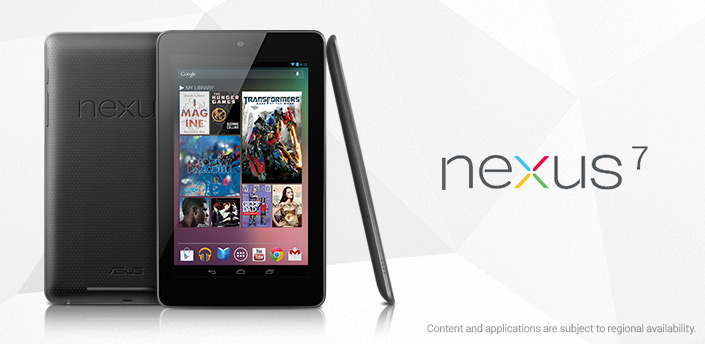
My own Nexus 7 arrived a couple of days ago.  As reported all over the web, it's optimized as a consumption device for the offerings of Google Play, their digital ecosystem of books, magazines, music, movies, and TV.  This is hardly a radical idea.  The iOS/iTunes pairing and the Amazon Kindle Fire are also designed toward the same goal; each claims to offer a complete one-stop answer for all your media purchase, storage, and consumption needs.
Content bound to media: how quaint
image from freedigitalphotos.net

What doesn't get mentioned often is just how carefully each is designed to make sure you don't get or consume content from the competitors.  That's the business model: create a single point of contact for digital media, keep it inside your own four walls, and sell it as a package.  Alas for big companies, that's the big-box retail model brought to the web, isn't it? As a consumer, you trade convenience for lock-in and more limited choice.

In that way, the business models from each company work directly against your own increasing ability to own and control your own content.  At the same time, across almost everything we see in technology, the real trend is toward personalization, more specialized choice, and the movement of tech power further away from big companies and ever closer to the end user.  

When you think about digital ecosystems as part of a business plan, rather than a reflection of where society and technology are taking us, there is a disconnect.  Where there is a disconnect, there is a need and a possibility.  Where there is a need, there is a business opportunity, and the likelihood of disruption.

 Later in this article, I'll introduce the idea of externalizing that control with Digital Content Identity and Access Management, and offer ideas about the way that one change may profoundly alter the way we think of digital ecosystems.

Historically, the physical manifestation of art--words, sounds, images--was bound to the thing that brought that content to you.  It could have been words on the page of a magazine or a book, or the tracks on an LP or CD.  When you paid for the physical thing, you bought a license for the artistic part at the same time.

The core of the stateless idea is that each of those elements is decoupled from the others; data and applications are cloud-delivered, and consumed on a machine designed to deliver a user interface and a connection to the cloud content.  The inevitable trend is toward separation of content from delivery mechanism from consumption mechanism.   So what happens to the license, your payment for the true worth of a book, a song, or a movie?  For the most part, when you become part of a digital ecosystem, it is still bound to the delivery mechanism, and your newfound digital freedom has been limited.

There is no iTunes app for Android, for instance.  You can "own" streaming movies through Amazon, but you can only access them through the video player on Amazon's website, which is Flash-only, therefore off-limits for iOS and my new Nexus tablet, which is Android Jellybean and also not Flash-enabled.  Digital books from Amazon are linked to their own Kindle device--and even though you've paid for a Kindle book, you can't loan it to anyone the way you could with a physical book (correction: shortly after I published the story, a reader let me know that you can, in fact, loan a Kindle book on a one-time basis to another reader. I think that is good news.)

Google Play is somewhat less controlled, but it's still a "four-walls" kind of thing.  Buy a song from Google, where do you have to manage it?  Yup. If any of these sites goes down, do you have rights to access a licensed copy of your content somewhere else?  No.  If your account is hacked, who do you have to go through to regain access to your content?  The ecosystem.  I think you see the point.  As things stand now, you only own content you buy if you play by the rules of the company that sold it to you. 

It's as if, 25 years ago, you bought a Fleetwood Mac CD from a Virgin Megastore, could only store it in their proprietary CD case, and only play it on a Virgin player.  I exaggerate, of course, but the point is, we have all gained one freedom--online access to our stuff--by trading control of it to the company we choose for that digital ecosystem.

The promise of stateless digital content is unfulfilled.  If ever there was an area facing a perfect storm of technology change, new user expectations, and old business ideas fighting to stay alive, this is the place.

What is the opportunity?  Digital content identity and access management (DCIAM) 

As part of your online identity, this company will--once it exists--maintain a database of all the digital rights you own, authenticate you as the rightful owner, and verify you as licensed owner of cloud-sourced digital content.  Accessible as a universal web service, and independent of any ecosystem, this is a not only a logical outcome of the move to stateless, it is a huge enabling technology for:

  • Further disintermediation of traditional media companies, as independent artists' reward system would move outside the media companies' control.  If you are a media company, it is now in your interest to make sure your product can be sold in the widest-possible range of locations, because what you are selling is just the license, now handled by a trusted third party.  If your business model is based on artificially high prices based on forced linkage between content, delivery, and consumption, that model will be in significant danger.  
  • New sales models, in essence re-enabling in digital format the old megastore idea, in which you could pay for a license for any content from any publisher or creator.  As the consumer, you would no longer be hindered by the fact that your ecosystem vendor does not have sales agreements with every source.
      
  • New digital content storage, management, and delivery vendors, who maintain libraries of content in common, and follow the cloud shared tenancy model to supply you with your content via DCIAM authentication.  Any device, any time.  If one vendor is down, DCIAM eliminates barriers to your access through another source.
  • New ultra-personalized "stations" combining delivery of your own licensed content with new content paid for via advertising or subscription.  I've already written about this idea as applied to Pandora.com, in which Pandora saves broadcast license fees by subtracting them from any content they play you that you already own.  If I paid for "Go Your Own Way" by Fleetwood Mac when I bought rights to the "Rumours" album, there is no longer any reason why Pandora should pay BMI or ASCAP if they stream it to me.  DCIAM makes granular song-by-song licensing not only possible, but powerful.

    Using DCIAM, the same model might further the distruption of the traditional video network concept and the cable/satellite industry.  We are already seeing a big consumer push toward a-la-carte TV; DCIAM can push that further toward the consumer.  If Pandora can deliver me a personalized audio experience of female jazz singers from the 50s, there is no logical reason why I can't get my own cooking channel on TV, assembling the best shows currently on the Food Network, Bravo, PBS, and the Travel Channel.  DCIAM would also manage one-time use licenses, such as for a TV show, either via purchase or paid by acceptance of advertising.  This is essentially a new network model, not of broadcasting, but of extreme narrowcasting.  DCIAM enables the business model.
     
  • Handled properly, the marketing opportunities presented by one common database of a consumer's taste and purchasing history for content can use DCIAM to radically personalize ad delivery in cases where content consumption is still ad-supported.  Ad personalization is still wildly fragmented, and largely because information about purchases and interests is localized to the sites that control the ecosystem.  Once that is externalized, those barriers are gone.  This is "era of you" personalization brought home in the form of a huge business opportunity.  If digital ecosystems are the sentinel of the stateless future, digital ad personalization is that sentinel's entrepreneurial cousin.

Technology triggers are in action here.  Changes in what is possible--stateless licensing, content, delivery, and consumption--mean that opportunity is near for a company who moves beyond the current digital ecosystem model.  In so doing, they access business opportunities that make current ecosystem efforts look miserly by comparison.  

Combine DCIAM with the upcoming revolution in digital personal assistants, and you begin to see the true battle of the giants for your loyalty in the near future.  

There are big questions.  Who will bring this to you?  Who will still be a significant vendor in 5 years? Who will you trust?

Infrics.com articles referenced in this report:


Don screams into his laptop at Pandora.com.  Computer says no.

Friday, July 13, 2012

The Nexus 7 and The Cloud Commit Conundrum: Google Wins (For Now) | John Battelle's Search Blog

The Nexus 7 and The Cloud Commit Conundrum: Google Wins (For Now) | John Battelle's Search Blog:


When John Battelle expresses an opinion, I take notice.  His article is not just another review of the new Nexus 7 tablet, but a discussion about what your choice of devices means in terms of your commitment to the ecosystem of the company that brings it to you.  In his words, "your choice of tablet or phone...becomes a choice about what kind of a company you want as a partner in your digital life."

I have a Nexus 7 on order, and will report on my own experience with it in the near future.

Tuesday, July 10, 2012

A Student's Smart Microsoft Rebranding Is Better Than The Real Thing | Co.Design: business + innovation + design

Image from fastcodesign.com

A Student's Smart Microsoft Rebranding Is Better Than The Real Thing | Co.Design: business + innovation + design

I think the Fastcodesign branch of Fast Company does some very nice work.  Design is an important part of the way the future will look and feel; it's important.

Lately, the idea that you use a screen to simulate the 3-D look of real objects has started to seem very old-fashioned.  Compare Apple's "bookcase" metaphor on iOS to the rebranding of Google's online look (no drop shadows, no "raised-looking" buttons.)  If you view the article's slides on this student's MS rebranding, there's some excellent discussion of this next generation of thinking about digital design.