Showing posts with label innovation. Show all posts

Sunday, April 15, 2012

Ship code or ship out: Bootcamp for new Facebook engineers - San Jose Mercury News

Image: San Jose Mercury News

Ship code or ship out: Bootcamp for new Facebook engineers - San Jose Mercury News:


Mike Swift reports on Facebook's flat culture and "move fast and break things" mentality.

I think there is much to learn from this style of enterprise, especially about the courage it takes to implement the policies that allow agility and continuous improvement.

BTW, Swift is definitely worth following on Google+.


'via Blog this'

Monday, January 9, 2012

This Is Generation Flux: Meet The Pioneers Of The New (And Chaotic) Frontier Of Business | Fast Company

This Is Generation Flux: Meet The Pioneers Of The New (And Chaotic) Frontier Of Business | Fast Company:


If you care about your business in the 21st century, please make time to read this article.  Here are two important ideas from Fast Company:

1. "The pace of change in our economy and our culture is accelerating--fueled by global adoption of social, mobile, and other new technologies--and our visibility about the future is declining."  


2. "The next decade or two will be defined more by fluidity than by any new, settled paradigm; if there is a pattern to all this, it is that there is no pattern. The most valuable insight is that we are, in a critical sense, in a time of chaos."


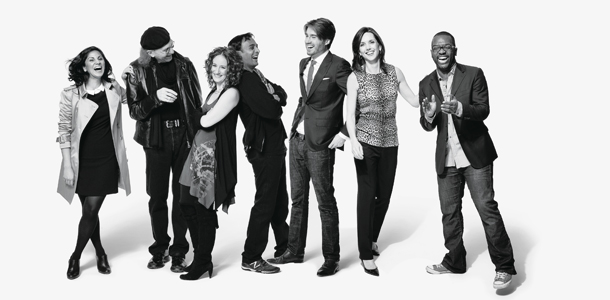
Chaos-surfers.  Image from Fast Company
Understanding the Infrics.com big ideas is one key to riding change successfully.  Although there is chaos, there is an underlying pattern of emerging technologies and societal trends.  I won't attempt to predict the exact shape of the future, but I do believe you can focus your attention on key ideas, and take actions that prepare you and your company to cope and thrive. 

'via Blog this'

Thursday, January 5, 2012

So Much Fun. So Irrelevant. - NYTimes.com

So Much Fun. So Irrelevant. - NYTimes.com:

Op-Ed columnist Thomas L. Friedman in the New York Times. On the surface, this article is about the way political campaigns don't talk about real issues; get to the second paragraph, and his issue is straight to the point about Infrics.com era of you coverage.

"The I.T. revolution is giving individuals more and more cheap tools of innovation, collaboration and creativity — thanks to hand-held computers, social networks and “the cloud,” which stores powerful applications that anyone can download. And the globalization side of this revolution is integrating more and more of these empowered people into ecosystems, where they can innovate and manufacture more products and services that make people’s lives more healthy, educated, entertained, productive and comfortable."

The moral: bandwidth enables job creation. Tech power to the people.


'via Blog this'

Thursday, December 15, 2011

The digital personal assistant: Google's Majel project says "make it so"

Image from Android and Me website
Android and Me just published this article on Google's AI/personal assistant/Siri competitor, Majel.

More info on Google’s Majel, moving a little faster towards that Star Trek future | Android and Me:

I believe one of the biggest tech changes we'll see in our lives in the near future will be the digital personal assistant, powered by artificial intelligence, completely voice-enabled, and democratizing the experience of top executives, who have a trusted personal assistant.

It's the missing piece in a fully realized tech immersion life, in which we effortlessly know what we need at all times. See this article on "Rosie" for a sample of this life, and how it can happen. In that article I said that Google might be the best positioned company to deliver this future; this article hints at how close they are getting.


'via Blog this'

Tuesday, December 6, 2011

Innovation Excellence | The Geoffrey Moore Interview – ‘Escape Velocity’

Innovation Excellence | The Geoffrey Moore Interview – ‘Escape Velocity’:

This is an excellent interview from the Innovation Excellence site, with great enterprise leadership takeaways: Especially note the differentiation between leadership (currently undervalued) and management (over-valued). And the idea of "neutralization innovation," responding to competitive threats in order to minimize their impact. For instance, if RIM had moved quickly enough with the BlackBerry to neutralize the iPhone threat, their business might not be under threat today.
'via Blog this'

Friday, November 11, 2011

"The first completely new payment system in 30 years"

Dwolla founder Ben Milne. Image from Business Insider.com
LinkedIn just featured this story from the Business Insider website, and it's a natural for the business innovation ideas we've been talking about.

Dwolla is "an innovative online payment system that bypasses credit cards completely."

By using the existing bank-to-bank ACH system and charging only $.25 for a transaction of any size, this startup is now moving $350 million a month.

'via Blog this'

Wednesday, September 28, 2011

The era of YOU: personal choice, knowledge, and power drive the future


--the Big Ideas series continues


I've believed for a couple of years now that there are three intersecting trends in technology, business, and society that form a framework to make sense of the emerging future. Big Ideas.

The first two are relatively simple to express: that we are decoupling the devices we use from specific uses, applications, and data--that they are becoming stateless; and that the vertical, hierarchical elements of business and IT are being deconstructed into component services that can be deployed more flexibly and repurposed in new ways.

I have to confess, although I’ve had a sense of the third idea, expressing it in a way that has the power of the first two has been a challenge.  It’s partly about the way the internet and social networks are changing our sense of what a community means. It’s about the increasing ability of end users in enterprises to choose and deploy their own technology solutions.  It’s about the flattening of power structures in business and the increasing power of consumers to interact with businesses.   But none of these by itself expresses the big idea; each of these trends is a part of the bigger concept:


Technology is enabling individuals to know more, in more places and situations, and have increasingly powerful choices about the way they live and work.

We are entering the era of you.


This article is the first in a series about that idea.  Parsing that big introductory statement into an “ecosystem of the future,” in which the implications become more understandable and more actionable, where specific ideas become visible as part of a larger trend, will guide the articles to come.

Since this site is largely about the intersection of business with technology and society, I’m planning a major emphasis on what this means for business.  Based on my research history and analysis of what I’ve observed, I’m coming into this part of the big ideas series with some specific ideas to explore:

--Business primarily operates in “communities of place,” working in largely common places face-to-face. and mostly highly capitalized.   I believe this will be changed by communities of interest--enabled by social technologies.  It’s not just remote work, that’s simply a segment of the idea; it deals with the emergence of business communities, collaborative efforts at many levels of planning, managing, and executing business goals.  Typical of new business communities will be the ability to form, scale, and disband quickly, operate at low inertia and high speed, and succeed with much lower levels of capitalization.  This creates low entry barriers for competitors of established businesses, and is likely to mean major disruptions.

--Business also operates largely in “communities of hierarchy,” in which the predominant metaphor is “command and control.” I think this will, and ought to, be challenged by flatter organizations--with fewer layer of management--to enable agility, that take advantage of the new social models, and respond to demands of a workforce rapidly evolving in its expectations of speed, personal choice, and flexibility.  

--In an ironic twist, corporate IT departments, long yearning for acceptance as a valued business partner, will achieve that end by largely disappearing.  Services-enablement and flexible sourcing of most infrastructure and technologies result in business/technology roles that are neither all line-of-business nor all IT, but both at once.  The overall effect, and the most important implication, is the movement of power to choose and implement technology ever closer to those who use it.

--The nature of work is changing, and along with it the nature of what a career looks like.  More generalist/business analyst roles, more service definition and management. More distributed teams, flexible work assignments.  Less lifetime-with-one-employer.  If you’re a specialist, your career continues, but you are far more likely to work for a specialized services provider, who delivers your talent as part of its own economy-of-scale-powered enterprise.  In the age of you, expect powerful changes in expectations from employees regarding personal and technological satisfaction.  Employees will find lower barriers to move freely among different employers.

--As always, we’ll consider what business could rise as a result of this trend, and which businesses and business models might be endangered.

As we build out the stories of the biggest ideas shaping the future, then comes the chance to hold them up side by side to think about where things are going. I think this is exciting work, and I hope you'll follow and contribute to the discussion.

Tuesday, August 2, 2011

Fast Company: Your Face Is Your Key

Facial recognition is getting much more accurate, faster, and cheaper.  Fast Company reports on the latest:

Your Face is Your Key


If you didn't see the videos on Microsoft Kinect and the Samsung image recognition marketing program, they're both worth a look as part of understanding the ways technology is recognizing us and changing the ways we interact with machines:


Monday, August 1, 2011

How Technology Disappears: Part 2 of "A World of Services"

Thinking of technology delivery as an expression of services is a big idea.  Services help technology in business disappear.   
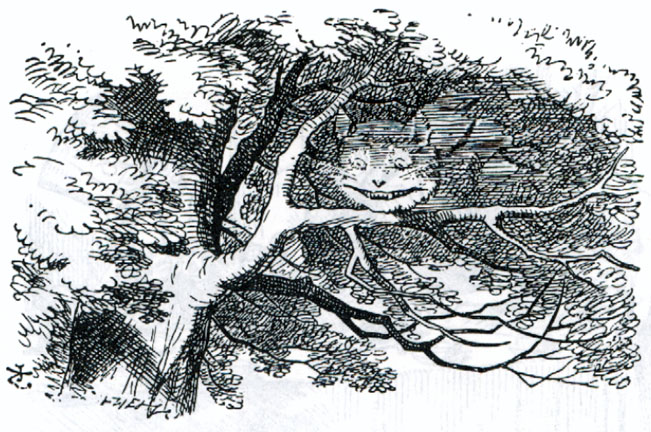
Cheshire Cat image from victorianweb.org

Why is this important?  What’s the payoff?

  1. Agility: The holy grail of business technology is to get to value more quickly.  Services move IT toward plug-and-play, and away from custom-tailored, take-forever-to-deploy solutions.
  2. Cost: standardize, externalize, gain economies of scale. Spend time and money on the things that make you competitive.
  3. Services are a foundational part of the move to stateless devices.  “Your-business-as-a-service” is a perfect match for “any device/any time/anywhere.”
  4. Services are foundational as part of moving decision-making about technology away from those who provide it (the traditional IT department) and toward those who use it.
As we focus on what that means as a trend, let’s examine the idea of services and think of them as part of the future of business.  

Service definition 1: simplify and standardize complex processes

Building a house is a good example of simplified services. Doors and windows are simplified and built to standard sizes.  You can buy what you need off the shelf and install it without customization, secure in the knowledge that it will fit and meet regulatory codes.  Because it was manufactured in large quantities in a standardized way, economies of scale make it much less expensive than a custom-made equivalent.  In exchange, you accept the range of sizes, styles, and colors, and design the house to accept the standards.

In business, most IT functions labeled “-as-a-service” are built on a model like this; users accept some standardization and buy the service as offered.  But that doesn’t fit for every business need, especially when the legacy technology grew up around ever-increasing levels of customization and complexity.  Which leads to:

Service definition 2: abstract complexity

Frankly, some parts of business are complex, and there is no magical way around it.  Even if you overcome the change management issues around greater simplicity of business processes, there are still regulatory and legal complexities that cannot be avoided. There are some complexities that deliver competitive value. But there are ways to abstract that complexity and mask it so that it appears simple. Someone has to manage complexity, but they can deliver it in such a way that those who use the service neither know nor care what is going on behind the scenes.

For an example of this, look to your car.  In the last 25 years, something remarkable has happened to automobiles.  Engines and transmissions, even in inexpensive cars, have growth dramatically more complex than before: turbochargers (sometimes 2 of them), multiple valves per cylinder, with continuously variable valve timing. Direct injection of fuel, electronic automatic transmissions with up to 8 speeds--all controlled by a computer system more powerful than mainframes of the recent past.  

It’s all abstracted from the driver. Start the car and it goes, without you having to care about a single one of those technological marvels.  Furthermore, during the 100,000 mile warranty period, the only maintenance required is fluid and filter changes.  Most of the engine is shrouded in molded plastic, looking more like a plug-in module than a piece of machinery.  Motive power as a service.  

The technology disappears, the benefit is what’s consumed.  

That’s the model current businesses and their IT departments can aspire to as a means of managing the complexity that can’t be eliminated.  The central questions

  1. Does this have to be complex? Is this a complexity of heritage process or legacy technology that is not needed?  Is it a worthwhile tradeoff to lose some customization to gain agility and lower cost? If so, you can move to the “simplify service” route.  Classic examples, standard office applications like word processing and e-mail.  
  2. Is this complexity that adds value, or is unavoidable for structural reasons, such as regulatory compliance?  If so,  the goal would be to abstract that complexity away from processes or people who use it, so that to them it appears simple.  For each complex service, ask question 1 again: are there components of this complexity I can simplify to make the abstraction process faster, easier, cheaper.

If you have succeeded, the result will be “building blocks” for technology and business processes, standard-appearing components.  They can be consumed--used as-is--or recombined to create other services.  

A hallmark of service orientation: those who provide a service know and care about the way it is provided, those who consume it don’t have to: DKDC (don’t know, don’t care.)  As service orientation spreads through IT and a company, DKDC spreads downward from the top, while power to deploy technology and combine services spreads upward toward users.

Service delivery starts with the end user, and works back until it reaches infrastructure. At the top, the main deliverable is “IT as a service.” That service is itself composed of individual and federated services.  This chart shows what that would look like:


The lower levels are foundational for those above. The Service Management level and Service Federation levels represent what I believe to be the future of IT within companies:

  • Definition and management of services becomes a central role, highly technical and specialized positions in the organization tend to be externally sourced as individual service components or packaged as third party services. Internal skills include high levels of focus on service contracts and service level agreements.  The orchestration of services and the management of quality of service delivery take on new importance.
  • Business applications are delivered as a service, either directly by a cloud vendor, as composite applications created in-house through federation of other services, or as legacy applications delivered through desktop virtualization.  
  • At the Delivery level, the close tie-in with stateless computing shows its value.  The entire “business as a service” experience is delivered through a web interface, and IT gets out of the user device management business.  
  • Key vertical roles within the services organization are the technology architect, who works across the various disciplines on service design, integration, and delivery; and the business technology analyst, a main point of contact between top-level service consumers--the users and the business departments--and the various service delivery teams.  But note, DKDC even extends to this level of consumer; if infrastructure-level services are deployed correctly, the analyst does not need to know or care how they are delivered.  

When technology disappears, information technology will have grown up; delivery of business capabilities through services is how that happens.

Next in the Big Ideas series, we’ll look at how stateless computing and a world of services become success triggers for the third major idea: flattening of organizations, and the movement of tech power ever closer to those who use it.

Friday, July 8, 2011

from Lean Technology Transformation: How Budgets Ruin Value Creation and Delivery

This is an insightful article, but challenging to traditional management processes.  The central theme parallels one I've made about research in business: in an effort to feel that they're in control, managers often measure the wrong things, the ones that are easy to measure.  And by so doing, create outcomes that hinder their businesses.

This quote from the article is important:

"...budget contracts can act like drugs. They seduce executives into believing that they have control over their future financial outcomes. But, like most drugs, they have serious side effects. They lead both senior executives and operating managers into an annual performance trap from which it is difficult to escape."

Lean Technology Transformation: How Budgets Ruin Value Creation and Delivery

Wednesday, July 6, 2011

Nothing but net: stateless computing, technology triggers, and the business of technology


I believe that stateless devices are one of the most important technology trends. The concept is simple and elegant:  all applications and data run from the cloud, with lightweight, fast-booting operating systems delivering a connection to the cloud and a very rich, browser-based user experience.

Devices built as stateless will need much less in the way of complex operating systems, and can be less expensive to build, buy, and operate.


Stateless is important because it changes the discussion about devices in the way social networks change the discussion about communities; we get to manage our lives based on what we need right now, not on being in the presence of the device where the software and data we want is residing.
    

But why should you accept that stateless computing is A Big Thing? 

Predicting technology is a constantly-shifting balance of art and science. But I do believe we can think of the future in ways that are more roadmap, less crystal ball.  That is the idea behind technology triggers, timelines of changing capabilities in which we can observe A and B and think clearly about the still-unknown C.


Here is a timeline for the enabling technologies of the stateless world:


The vertical lines show the triggers. As an example, the emergence of widely-distributed 3g wireless networks was one of the key enablers for the explosive growth of smartphones and the currently-popular online application markets.  Had you examined mobile computing through this lens just before 3g, and extrapolated to possible outcomes once it became available, you might have gained competitive advantage in the mobile space, just as Apple did with the iPhone.  We are clearly past the trigger point for the so called “app internet”  But we are also close to triggers for stateless computing, with Google’s Chrome OS and Chromebook computers being first to market.


Look at the graph as the timeline progresses; the enabling trends are moving in the direction of stateless computing, which overcomes major limitations in even the most advanced “app internet” situation deployed at the time of this article in summer 2011.  
Further, we can see that a true movement to cloud computing is not complete as long as we must still synchronize cloud and local data and do installation and maintenance of locally-installed applications--a model that is as old as Lotus Notes.   Apple’s vaunted iCloud service, which stores data and music in the cloud, still relies on local copies, a move analysts were quick to remind us, “looks great as far as it goes, which is all the way to about 2006.” 


The “app internet” concept is the future, says Forrester Research CEO George Colony.  I respect Mr. Colony and Forrester, but I think the tech triggers say otherwise.  The use of small-locally installed applications on top of a complex and proprietary operating system, using cloud data sync, is the best we can do in a world where connections are not quite pervasive enough. But it is still kludgy beyond belief, and does very little about the device dependence that now seems very old fashioned. 


We have not quite reached the “trigger timeline” when stateless takes off, but I think we are close.  What enablers are not quite there yet?

TriggerOpportunityDisruption
better internet connections: faster everywhere, transparently available via multiple sources IP network providers, especially mobile

quality-of-service management for IP connections

every “-as-a-service” vendor: Software-, Platform-, Infrastructure-

cloud-based media vendors: Pandora, Netflix, Hulu, Amazon
proprietary content delivery architectures: non-IP voice, cable and satellite television services

penetration and evolution of browser-enabled applications HTML 5  

desktop virtualization vendors to stateless-enable legacy applications


app developers


cloud-centric platforms and development environments

interface management systems that adapt stateless UI delivery to different browser forms on different devices.  
applications and developers still relying on client-server models

enterprises with large legacy app portfolios (although see “desktop virtualization” as opportunity to solve this)

rich internet application tools that rely on local installation of software: Adobe Air, Microsoft Silverlight


stateless-enabling operating systems and devices for other form factors: phones, televisions, tablets, automobiles

developers of new web interfaces: voice, gesture, image recognition.


the network effect of stateless benefits across many form factors presents a huge opportunity for manufacturers.  With very fast cycle times for mobile devices, a new market leader could emerge very quickly
fat operating system vendors could quickly be disintermediated: the stateless web experience is backward compatible with legacy operating systems, but not the other way around.


Although there is a high rate of change, there is also a big picture, a timeline from early mainframes, to networked PCs, to the internet-centric, multi-device era.


That multi-device era is where we are now: some cloudsourced data and some applications in the cloud, but still using a client-server model and complex operating systems.  While it's easy--facile, even--to say "the PC era is over," the truth is, we're much closer to a time in which the operating system and the purpose-built device of any sort will become almost invisible, and the idea of "browser" as a separate application becomes irrelevant.  
Stateless is the logical next step, based on evolving technologies, the social use of technology, and the historical evidence of the market in the face of the new capabilities brought on by those technologies.

Stateless is also the enabling technology that unlocks the greatest benefit of cloud computing, and helps us apply the lessons of online social interaction to the way we deploy and use the machines that make it possible. 
It is the tool through which data and applications in the cloud will create explosive growth in business value. Stateless computing is a big idea.

Friday, June 10, 2011

From Fast Company: 3M Visual Impact Scanner

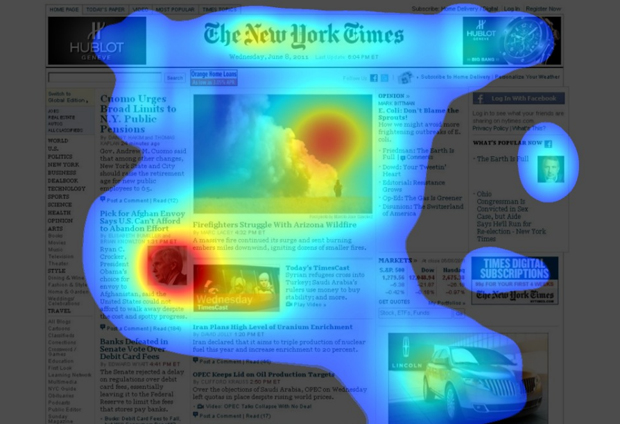
This is not a new way of interacting with the world, but rather a new way of analyzing how we interact.  Appeal: Web designers, marketers, e-business execs.

See the article on the Fast Company Site:

"3M Visual Impact Scanner Knows What Your Eyes Want"

Thursday, June 9, 2011

Excerpt from the upcoming "A World of Services"

I'm in the process of writing part 2 of the "Big Ideas" series.  Part 1, about the role stateless devices will play, is here.  Right now, I wanted to share this pre-publication excerpt from the next installment, which lays out the central points about "services," which I believe reflect current events, and promise great things:

"What qualifies the idea of services to occupy such an important spot?  Partly, it reflects what is happening in technology; “X-as-a-service” (XaaS) ranks right up there with “cloud” in the buzzword lexicon in 2011.  Cloud itself is an expression of services.  Like “web services,” one of the earlier expressions of the idea, services are powerful because they are simple and reusable.

In addition, business in general and IT in particular are cumbersome, slow-moving, and burdened by a heritage of extensive customization.  It costs too much, it takes too many layers of organization to plan, execute, and run.  In the case of the IT division, that burden has created the reputation of “IT as the people who say no.”  Services promise the chance to change all that for the better.  

This article will make the case that much of that customization can be cast aside where it is no longer helpful, and that a services-based organization will allow for a much easier--and much greater--level of customization in the right place, where it can offer genuine business value.

For both technology and business, we can think of services as:

A series of primarily horizontal processes, designed so they can be assembled to create a primarily vertical outcome


Conversely, if you can find a horizontal process that only serves one outcome, by definition, that takes it out of the range of useful services. One of the value markers for a service is the extent to which it serves many different processes."